
Key Takeaways
- Control packaging, zones, and carrier mix costs before you negotiate a single rate.
- Volume is leverage. The more you ship, the more room you have to ask for a better rate.
- Stop paying for air. Right-sized packaging is the quickest win against dimensional-weight charges.
- Distance costs. Shipping from closer to your buyers shrinks zones and transit time together.
- Some discounts are gated. Amazon shipping acts like any carrier, but most stores can’t reach it alone.
- Let your 3PL negotiate for you. A partner’s aggregated rates beat what you’d reach on your own.
Why your shipping bill is bigger than the label price
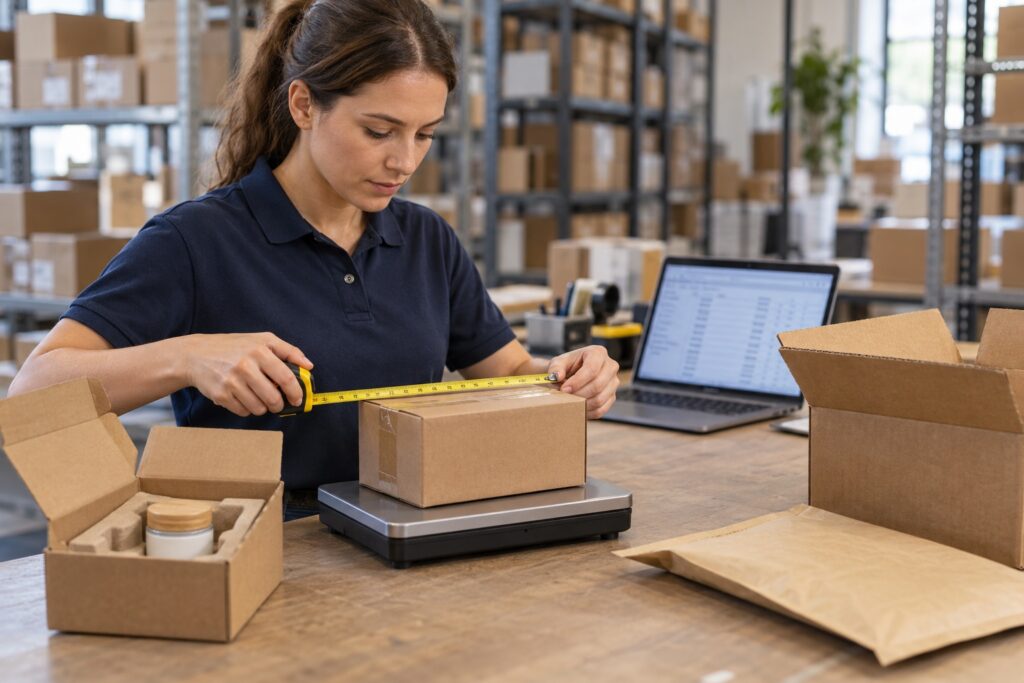
Every parcel carries costs that never show up on the headline rate. Carriers add a fuel surcharge that rises and falls with diesel prices, tack on fees for residential delivery and signature confirmation, and bill by dimensional weight whenever a box is bigger than it is heavy. A single surcharge feels trivial… until you multiply it across a few thousand orders a month.
That’s the trap. You shouldn’t be nickel-and-dimed to death by fees you never agreed to, but if you aren’t reading the itemized cost, you probably are. The sticker rate is rarely what you pay: fuel, residential, and dimensional-weight fees are where money quietly leaks out.
6 Ways to Reduce Shipping Costs for Your Online Store
1. Turn your volume into lower shipping costs
The single biggest lever is also the simplest to grasp: business shipping rates fall as your volume climbs. Carriers price on economies of scale, so the more predictable parcels you hand them, the more room you have to ask for a better number. That’s the whole idea behind negotiating shipping rates: you’re trading committed volume for a discount.
You don’t need a shipping department to do it. Here’s how to get discounted shipping rates as a shipper:
- Pull your data. Six to twelve months of history is what carriers negotiate against; promises don’t count.
- Ask carriers. Regional carriers all have room to move if you request a rate review.
- Commit realistically. Overpromising volume backfires the first month you fall short of the tier.
📌Can’t hit a carrier’s volume alone? Aggregated volume through a fulfillment partner gets you there. More on that below.
2. Right-size your packaging to stop paying for air
Dimensional weight is where stores quietly overpay. Carriers bill the greater of a parcel’s actual weight or its dimensional weight (box volume divided by a standard divisor). Ship a two-pound pillow in a twelve-inch cube, and you’ll pay as if it weighed roughly twelve pounds.
The fix: carry fewer box sizes matched closely to your products, and switch soft goods to poly mailers. Right-fit custom packaging usually pays for itself inside a month, and it helps minimize shipping costs on every order without touching your carrier contract.
3. Rate-shop every order, and use flat-rate when it wins
One carrier may be cheapest for one order and more expensive for the next. Rate shopping – comparing live carrier prices the moment you print a label – is how you get cheap shipping for small business volumes without a procurement team. For heavy items traveling a long way, flat-rate boxes often beat weight-and-zone pricing outright; for light items, a mailer on a regional carrier usually wins.
4. Shorten the distance every parcel travels
Shipping cost is tied to zones; the count of zones between your warehouse and your customer. One warehouse on one coast means long, expensive zones to half the country.
Splitting inventory across two coasts trims the zone count and the transit time at once, which is the real case for bi-coastal fulfillment. Just be wary of anyone promising nationwide one-to-two-day delivery. Honest providers quote most destinations within one to three days and are upfront about the gaps.
5. Use a carrier option most online stores can’t
Here’s a lever most competitor guides can’t offer. A limited group of fulfillment providers are approved to offer Amazon as a shipping solution. This includes daily trailer pickup, consumer-facing tracking, and POD, at rates most individual stores can’t reach on their own.
For a store shipping consumables or subscription boxes, that can be one of the most effective ways to lower shipping costs without changing a thing your customer sees at checkout. It’s worth learning whether Amazon shipping fits your ecommerce business before assuming it’s your go-to solution.
6. Let a fulfillment partner’s volume do the negotiating
Every lever above takes time, data, and leverage most growing stores don’t have in-house. This is where a third-party order fulfillment partner changes the math. You inherit the aggregated small business shipping rates the partner has already negotiated across all its clients, plus rate shopping, right-sized packaging, and multi-coast reach, without building any of it yourself.
For recurring orders, consolidating through subscription and batch fulfillment trims the per-parcel cost further.
This matters because shipping is a conversion issue, not just a cost one. Around 70% of shoppers have abandoned a cart over shipping cost or options, and with online orders now a meaningful slice of US retail sales, the store that ships affordably keeps more of the customers it paid to win.
The right partner goes beyond pick, pack, and ship; it hands you rates and reach you couldn’t build alone. Before you commit to anyone, run through the questions every ecommerce brand should ask.
Reducing Shipping Costs for Your Online Store by Lever
| Lever | What it targets | Best for |
|---|---|---|
| Volume negotiation | Base carrier rates | Consistent, higher-volume shippers |
| Right-sized packaging | Dimensional-weight fees | Every store, right away |
| Rate shopping | Per-order carrier choice | Mixed catalogs and destinations |
| Two-coast inventory | Zones and transit time | Nationwide customer bases |
| Amazon as a carrier | Rates and tracking | Stores that qualify through a 3PL |
See What You’re Really Paying to Ship Before You Change Anything
You can work through each of these changes yourself. But carrier rates, package size, shipping zones, and service selection all affect one another. We’ve helped ecommerce businesses sort through those decisions since 1986.
Send us your order data and, within 24 to 48 hours, we’ll return a fulfillment cost analysis showing your projected shipping and fulfillment charges line by line. No vague bundled number. No surprise fee for every touch. Just clear, itemized pricing you can use to decide whether changing your fulfillment setup makes financial sense.
Ready for more? Get your free fulfillment cost analysis.
Reduce Shipping Costs FAQs
How can a small business get discounted shipping rates?
Pull six to twelve months of shipping history, then ask each carrier for a rate review based on that volume. If you can’t hit their tiers alone, a fulfillment partner’s aggregated volume gets you to rates you couldn’t negotiate yourself.
What’s the fastest way to lower shipping costs right now?
Right-size your packaging. It needs no negotiation and no new software; just fewer, smaller boxes matched to your products, plus mailers for soft goods. That one change attacks dimensional-weight fees on every order you ship today.
Do I have to keep negotiating shipping rates as I grow?
Rates aren’t set once and forgotten. As your volume climbs, revisit them, or let a 3PL renegotiate for you. Continually reviewing your rates against real, growing history is how small business shipping rates stay competitive over time.
Can flat-rate shipping really be cheaper?
Yes, for the right parcel. A five-pound box of supplements shipping coast to coast often costs less in a flat-rate box than by weight and zone; the opposite of the light, bulky item that dimensional weight punishes.
Is a 3PL worth it just for the shipping savings?
Yes, once you’re shipping around 500 orders a month. Beyond the aggregated rates, you stop losing hours to packing and carrier admin; time that’s usually worth more than the postage line by that point.