Key Takeaways
- Kitting is the process of combining separate SKUs into one ready-to-ship unit with its own SKU, so the warehouse stores, counts, picks, and ships the kit as a single item.
- Unlike a storefront bundle, which the warehouse still picks item by item, a kit is physically combined into one package and makes sense when the same product combination keeps shipping in volume.
- High-volume ecommerce brands use kitting to cut picks and errors, ship faster during peaks and launches, and raise order value, as long as both components and finished kits are tracked in inventory.
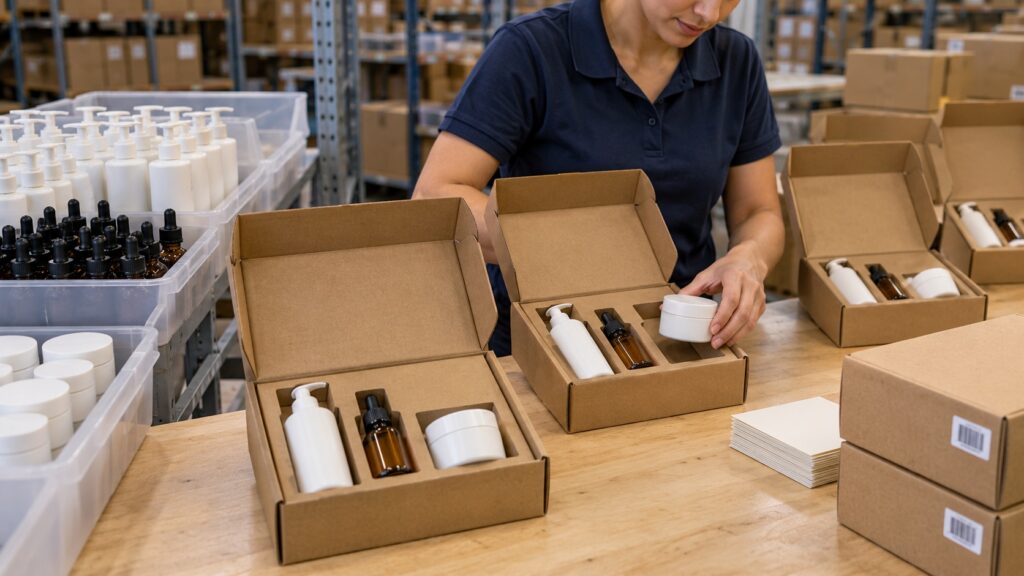
Kitting is the process of combining separate items into one ready-to-ship package that is stored, sold, and shipped as a single unit. If your customers regularly buy the same products together, kitting takes a lot of handling out of every order. Here is how it works and what to plan for.
What Is Kitting?
In plain terms, the kitting meaning is simple: several individual SKUs become one new item. A skincare brand might combine a cleanser, a serum, and a moisturizer into a three-step set. That set gets its own SKU and its own place on the shelf, so the warehouse picks one kit instead of three loose products.
Kits are either pre-built ahead of demand or assembled on demand as orders arrive. Brands with steady sales tend to pre-build, while brands testing a new set or running a short promotion often kit on demand until the numbers justify a larger run.
In kitting logistics, the kit is stored, counted, picked, and shipped as one item. Kitting also shows up elsewhere in the supply chain, such as manufacturing, where parts are staged into kits for an assembly line. For ecommerce brands, it is about getting finished products to customers faster and more consistently.
Kitting vs. Bundling vs. Assembly
Kitting and Bundling
Kitting and bundling are often used interchangeably, but they usually describe different things. A bundle is frequently a grouping that lives on your storefront: the customer buys a set, but the warehouse still picks each item separately when the order arrives. A kit is physically built: the components are combined into one package, often ahead of time, and ship as one unit. Bundling needs little setup, while kitting pays off when the same combination ships again and again.
What Is Kitting and Assembly?
Assembly goes a step further than kitting. Instead of placing finished products together, assembly builds something new from components, such as putting together a display, constructing a gift box, or adding parts to an existing product. That is why the two are often offered together: many projects need a little of both.
How the Kitting Process Works in a Warehouse
Warehouse kitting follows a repeatable sequence. The kitting process usually looks like this:
- Define the kit. Decide the components, quantities, packaging, and any inserts.
- Assign a kit SKU. The kit gets its own SKU so it can be sold and tracked separately from its components.
- Receive and store the components. Each component is counted at receiving and stored as its own item.
- Build the kits. Kits are assembled to your specification, in a pre-built run or as orders come in.
- Finish and label. Kits can be shrink-wrapped, heat sealed, stickered, or labeled.
- Store or ship. Pre-built kits go back on the shelf; on-demand kits ship with the order.
A written kit spec, with photos of a finished unit, keeps every later step consistent.
Types of Kitting
Most ecommerce work falls into a few types of kitting.
Product Kitting
Product kitting combines items that already sell on their own into a new offer: a supplement starter pack, a skincare routine set, or a holiday gift set. It creates a new product without manufacturing anything new.
Subscription Box Kitting
Subscription boxes are kitting on a schedule. Each cycle, identical boxes are assembled and shipped in a batch to every subscriber, so accuracy and timing matter as much as speed. That is why kitting and subscription box fulfillment work hand in hand.
Promotional Kitting
Promotional kits combine branded items and marketing materials for launches, events, influencer outreach, or customer gifts. When the merchandise is sourced and shipped from the same place, branded merchandise fulfillment and kitting become one project instead of two.
Retail-Ready Kitting
When kits ship to stores rather than to consumers, they need to be assembled, labeled, and packed to each retailer’s requirements, ready for the shelf.
Benefits of Ecommerce Kitting for High-Volume Brands
For high-volume brands, ecommerce kitting improves every order:
- Fewer picks per order. One kit replaces several individual picks.
- Fewer errors. A missing item is caught once on the build line, not order by order.
- Faster ship-out. Pre-built kits are ready the moment orders drop, which helps during peaks and launches.
- Consistent presentation. Every customer gets the same unboxing.
- Higher order value. Sets encourage customers to buy more than one item.
- A way to move slow sellers. Pairing a slower product with a best seller clears aging inventory.
Kitting works best alongside solid ecommerce fulfillment, so kits ship from the same place as the rest of your orders.
Kitting Packaging & Kitting Inventory
Kitting Packaging
Kitting packaging protects the contents in transit and presents your brand when the box is opened. Right-sized custom packaging, with dividers or trays where needed, keeps items from shifting. Branded boxes and custom printed inserts, such as a thank-you card or a how-to-use guide, turn a set of products into an experience. Plan packaging with the kit, since box size and materials affect build time and shipping cost.
Kitting Inventory
Kitting inventory is more complex than standard inventory because you track two levels: the individual components and the finished kits. One missing component stalls the whole build. Good inventory management tracks both, with reorder alerts on components. In our warehouse management system, components and finished kits are tracked separately, so you can see what is ready to ship and what still needs building.
Watch demand, too: too many kits tie up components in sets that may not sell, while too few can delay orders mid-promotion.
Kitting With a 3PL
Many brands start kitting in a back room, which works until volume grows. A fulfillment partner that offers kitting and assembly services stores and ships your components, kits, and orders from one place, with one team. If you are new to outsourcing, start by understanding what a 3PL is.
As a family-owned company in business since 1986, PSI treats every kit program as a partnership: we help define the kit, build it to spec, and ship it with the rest of your orders.
What Is Kitting FAQs
Is kitting the same as pick and pack?
No. Pick and pack pulls each item as the order comes in, while kitting does the combining up front. Most brands use both: pick and pack for varied orders, kitting for repeat combinations.
What is a kitting fee?
A kitting fee is what a fulfillment provider charges to build your kits, and it is usually based on the work each kit requires rather than a flat rate. The main cost drivers are how many components go into each kit, how many touches the build takes, finishing work like shrink-wrap or labels, and how many kits are in the run. A fulfillment cost analysis puts numbers on your specific kits.
What is de-kitting?
De-kitting is the reverse of kitting: breaking finished kits back down into their components. It lets components return to regular inventory when a promotion ends or a set stops selling.
Is kitting worth it for a smaller brand?
Yes, if the same combination ships often enough to justify the setup. If combinations change constantly, picking at order time is simpler. Start by checking your order history for products frequently bought together.
What does kitting mean in a warehouse?
In a warehouse, kitting means combining several individual SKUs into one new item that is stored, counted, picked, and shipped as a single unit. The kit gets its own SKU and its own shelf location, so the picker pulls one kit instead of several loose products. Kits can be pre-built ahead of demand or assembled as orders come in.
What is an example of kitting?
A skincare set is a common example of kitting: a cleanser, a serum, and a moisturizer are combined into one three-step kit with its own SKU. Other examples include supplement starter packs, holiday gift sets, monthly subscription boxes, and promotional kits that pair branded items with marketing materials for a launch or event.
What are the steps in the kitting process?
The kitting process starts with defining the kit (its components, quantities, packaging, and inserts) and assigning it its own SKU. The components are then received, counted, and stored as separate items. Kits are built to spec in a pre-built run or as orders arrive, then finished with shrink-wrap, heat sealing, stickers, or labels. Pre-built kits go back on the shelf, and on-demand kits ship with the order.
What is the purpose of kitting?
The purpose of kitting is to take repeat handling out of orders that contain the same products every time. Building the combination once means fewer picks per order, fewer missed items, and faster ship-out when orders spike. Kits also give every customer the same unboxing, encourage larger orders, and help clear slow sellers by pairing them with best sellers.
What is the difference between kitting and assembly?
Kitting places finished products together in one package, while assembly builds something new from components. Building a display, putting a gift box together, or fitting extra parts onto a product are all assembly work. Many projects need a bit of both, which is why kitting and assembly are often offered as one service.
What is the difference between kitting and bundling?
Kitting physically combines products into one package before shipping, while bundling usually just groups products on your storefront and leaves the warehouse to pick each item separately. A kit ships as one unit with its own SKU. Bundling is quicker to set up, and kitting earns its setup time when one combination keeps shipping in volume.