
Ecommerce peak season is the stretch from late fall into early January when order volume, carrier strain, and customer expectations all hit their highest point of the year. For a growing direct-to-consumer brand, it can be the most profitable few weeks on the calendar or the most expensive, and the difference is usually decided months before the first Black Friday order. Good ecommerce holiday preparation is mostly a fulfillment job, and below we cover what peak season looks like, 10 holiday fulfillment strategies that keep orders moving, and where a 3PL fits in.
What Is Ecommerce Peak Season and When Does It Start?
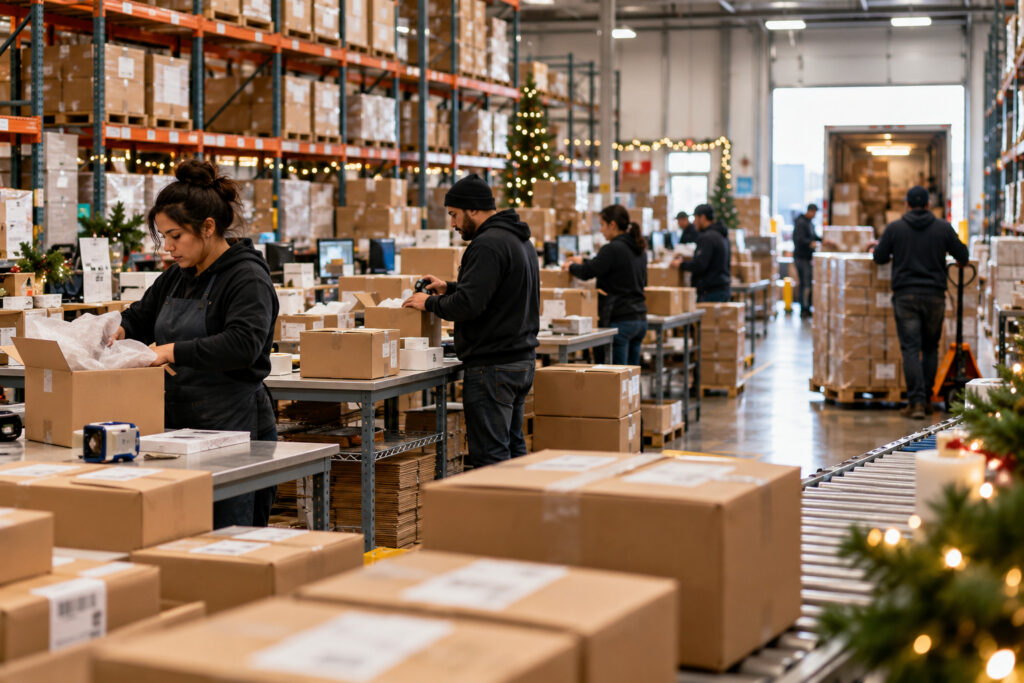
Peak season is the period when your sales, and everything behind them, run at their highest volume. For most ecommerce brands in the US and Canada, it builds through the fall and peaks between US Thanksgiving, always the fourth Thursday in November, and Christmas, with the five days from Thanksgiving through Cyber Monday usually the most intense. It doesn’t end on December 25, either: gift returns and exchanges keep arriving through January.
Your own calendar may look different. Some of the brands we work with peak around Mother’s Day or in summer rather than in December, so plan around your own sales history, not just the retail calendar.
10 Holiday Fulfillment Strategies for Ecommerce Peak Season
Every brand’s peak looks a little different, but the work that makes it run smoothly is the same. Here are the steps worth taking, in roughly the order you’ll need them.
1. Forecast Demand and Build Your Holiday Sales Plan Early
Start your ecommerce holiday planning two to three months before Thanksgiving. Pull last year’s sales by SKU, then layer in what’s different this year: new products, new sales channels, promotions already on the calendar, and any growth since last season.
The result should be a simple holiday sales plan: which products you’ll push, which promotions you’ll run and when, and how many units you expect to sell of each. Settle your marketing calendar at this stage too. A promotion your warehouse doesn’t know about is how a good sale turns into a backlog.
2. Plan Holiday Inventory Management Around Your Best Sellers
Holiday inventory management comes down to two questions: do you have enough of what will sell, and is it where it needs to be? Hold extra safety stock on your best sellers, the small group of products that drive most of your revenue, and go lighter on slow movers that could still be sitting on a shelf in February.
Talk to your suppliers early, too. Factories, freight, and ports all get busier in the fall, so confirm lead times and production slots before you place final orders, and keep a backup supplier in mind for your top items. For the methods behind reorder points and safety stock, see our guide to ecommerce inventory management.
3. Share Your Forecast and Confirm Capacity With Your 3PL
Your 3PL can’t plan around a forecast it never sees. Share your expected volume, promotion dates, and any new SKUs as early as you can, then ask direct questions. Can you handle this volume? How will you staff for it? Which fees change during peak?
Staffing is where many warehouses struggle. The usual answer is to hire seasonal workers in the fall and train them on the fly, which is when picking errors creep in. At PSI, our warehouse team averages more than ten years with the company, so the core of the team packing your holiday orders has been through many peak seasons before.
4. Send Inventory Before Your 3PL’s Receiving Cutoffs
Most 3PLs set a receiving cutoff for the holidays: a date after which new inventory may not be checked in and shelved in time for peak orders. Ask for yours, then work backward to build an inbound plan covering which SKUs, how many units, and when each shipment should arrive.
Aim to have holiday stock received and counted well before your biggest promotions start, because inventory sitting on a truck or waiting at the dock can’t be sold. Book receiving appointments early, especially for container loads, and send accurate packing lists. Careful receiving and container unloading catches shortages and mislabeled cartons before they turn into oversold orders.
5. Test Your Order Flow and SKUs Before the Rush
If you’re adding a sales channel or a warehouse this year, finish it and test it before peak, not during. A store connection that works fine at fifty orders a day can behave differently at a few thousand.
Run test orders through the scenarios you’ll actually see: bundles, split shipments, backorders, gift messages, and returns. Make sure every SKU matches between your store and your warehouse, since a mismatched SKU becomes an order that sits unfulfilled. Our store and marketplace integrations page shows how online stores connect to our warehouse management system.
6. Budget for Peak Season Surcharges
Carriers raise prices for peak. USPS applies temporary holiday price adjustments, while UPS and FedEx add peak or demand surcharges, typically from the fall into January. These fees tend to hit residential deliveries and large or heavy packages hardest, which describes much of what a D2C brand ships.
Build these surcharges into your holiday pricing and free-shipping thresholds now, so a promotion that looks profitable in October still is in December. Ask your 3PL which of its own fees change during peak as well. Right-sized packaging and shipping from closer to your customers both help offset the increase, and our guide on how to reduce shipping costs covers both.
7. Diversify Carriers for Peak Season Shipping
Peak season shipping puts every carrier network under pressure at the same time. Weather, volume spikes, and capacity limits can slow a single carrier for days, and if all of your orders ride on that one network, all of your customers wait.
Spread your volume across more than one carrier and agree on a backup plan before you need it. PSI is one of a limited number of 3PLs approved to offer Amazon as a shipping solution. It works much like a traditional carrier, with daily trailer pickup and consumer-facing tracking, and gives our clients another option alongside the usual networks. For more on how carriers price and handle packages, see our guide to small parcel shipping.
8. Set Clear Shipping Cutoffs and Keep Customers Informed
Customers buying gifts want to know one thing: will it arrive in time? Publish order-by dates for each shipping option on your site, in your emails, and at checkout, set a day or two ahead of the carriers’ own deadlines. Carriers post their schedules each fall, so check the USPS holiday shipping dates, the FedEx holiday page, and the UPS time and cost calculator before you set yours.
Offer more than one shipping speed so late shoppers can still buy, and turn on automatic tracking updates. Of all the holiday shipping tips, this one saves the most support time: a customer who can see where an order is doesn’t need to ask.
9. Plan Gift-Ready Kits, Inserts, and Custom Packaging
Many holiday orders are gifts, so presentation matters more than usual. Pre-built gift sets and bundles ship faster when volume spikes, because the warehouse picks one finished kit instead of several loose items. Our kitting and assembly team builds sets to your spec and ships them with the rest of your orders.
We also handle custom printed inserts, including on-demand inserts on Shopify orders, so a card reading “Love you, Mom” goes into the right box, and we source branded custom packaging delivered straight to the warehouse that fulfills your orders. Place packaging and print orders early, because suppliers get busy in the fall too.
10. Prepare for the Post-Holiday Returns Surge
Returns peak right after the holidays, as gift returns and exchanges arrive through January. Decide your holiday return policy before the season starts; many brands extend the window for November and December purchases to give gift buyers more confidence. Then plan how returns will be handled: how quickly items are inspected, which go back into sellable stock, and which are set aside. For brands with heavy return volume, a clear reverse logistics process matters as much as outbound speed. PSI runs a dedicated returns receiving center, so returned units are checked in and sorted instead of piling up in January.
How a 3PL Helps You Handle Ecommerce Peak Season
A solid holiday fulfillment strategy is much easier to run when the warehouse side is already handled. A 3PL receives and stores your inventory, picks and packs orders, ships them at negotiated rates, and processes returns, while you focus on sales and customers. If you’re weighing the move, our guide to outsourced fulfillment covers when it makes sense, and our guide on how to choose a 3PL covers the questions worth asking. Just start early: switching providers a few weeks before Black Friday leaves little room to fix problems.
With PSI, you work directly with the owners and your account manager from the first conversation. Through our partner network in California, Massachusetts, and Ottawa, your inventory can also sit closer to your customers, with one customer service team, one invoice, and one login. We’re a family-owned 3PL in Norcross, Georgia, in business since 1986 and focused on ecommerce fulfillment services for high-volume, small-parcel brands. Send us your order data and we’ll return a fulfillment cost analysis within 24 to 48 hours, so you can see what your next peak season would cost before you commit.
Monitor Results and Review Your Peak Season Performance
During peak, check a short list of numbers every day: order volume against forecast, stock on your best sellers, orders shipped on time, and delivery questions from customers. When the season ends, hold a short review with your team and your 3PL, comparing what you forecast with what actually sold and noting where orders got stuck. That review becomes the starting point for next year’s ecommerce holiday readiness plan.
Ecommerce Peak Season FAQs
What Is A Peak Season Surcharge?
A peak season surcharge is a temporary fee carriers add to shipping rates during their busiest months, usually from fall into January. It covers the extra cost of moving holiday volume and most often applies to residential deliveries and large or heavy packages.
How Early Should I Start Preparing For Peak Season?
Start two to three months before Thanksgiving. That leaves time to forecast demand, place inventory orders with suppliers, share your plan with your 3PL, and get stock received before your promotions begin.
Should I Switch 3PLs Right Before The Holidays?
Usually not. Onboarding, inventory transfers, and integration testing take time, and peak season leaves little room to fix problems. If you’re unhappy with your current provider, start evaluating options now and plan the move for after peak.